
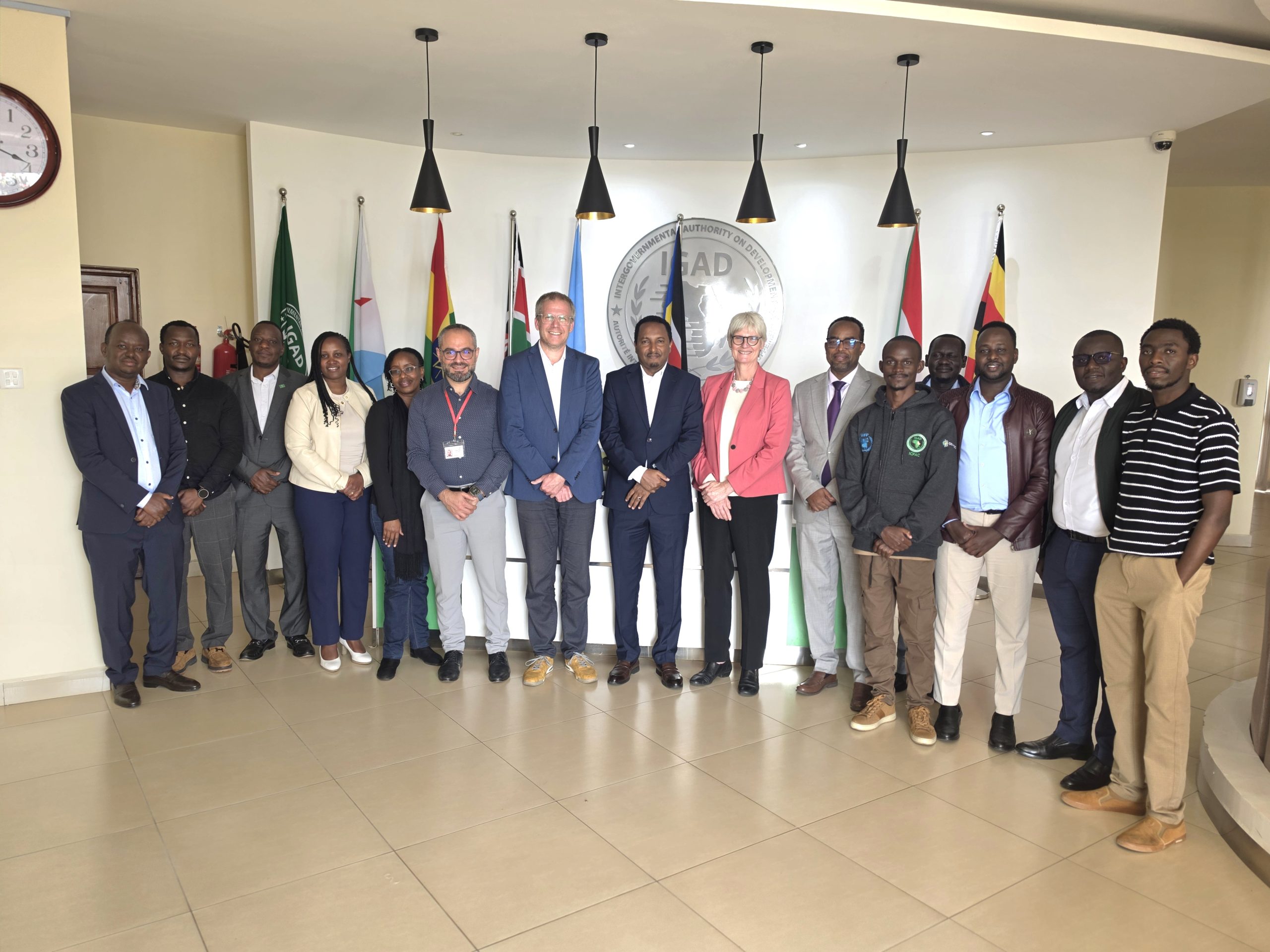
The ability to anticipate climate and weather-related risks is increasingly critical to strengthening resilience across the Horn of Africa. Against this backdrop, a GIZ delegation visited the offices of the IGAD Climate Prediction and Applications Centre (ICPAC) to deepen understanding of the institution’s role in generating and translating climate information into actionable knowledge for the region.

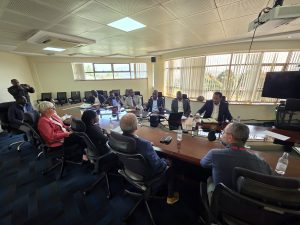
The delegation was led by Matthias Rompel, GIZ East Africa Regional Director, alongside Petra Jacobi, Programme Director for the Agriculture and Rural Development Cluster, and colleagues from the MODIAC and SCIDA III programs. The visit provided an opportunity for a round-table discussion with ICPAC’s management team, offering the GIZ delegation insights into ICPAC’s mandate, regional role and contribution to climate resilience across IGAD Member States.
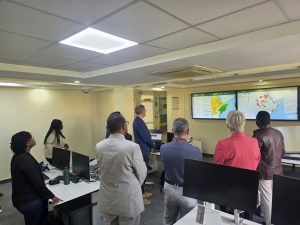
A key highlight was the visit to the ICPAC Situation Room, where the team explored how climate and hazard information is monitored, analysed and communicated to support timely decision-making. The delegation was introduced to ICPAC’s Hazard Watch, which provides important information on emerging hazards and risks across the region. The team also received a demonstration of ICPAC’s work on Multi-Hazard Early Warning and Anticipatory Action, including applications supported by GIZ.
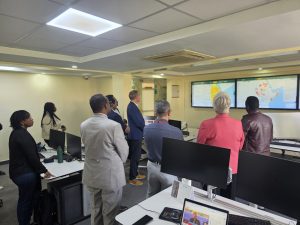
These systems demonstrate the importance of moving beyond responding to disasters after they occur towards anticipating risks and taking action early. Timely climate information can help governments, communities and development partners prepare for droughts, floods and other climate-related hazards, ultimately helping protect livelihoods, food security and development gains.
The engagement reaffirmed the value of strong collaboration between GIZ, IGAD and its specialised institutions such as ICPAC in strengthening climate services, early warning systems and anticipatory action across the Horn of Africa. As climate risks become increasingly complex and interconnected, partnerships that connect science, data and decision-making will remain essential to building a more resilient region.

#HornOfAfrica #ClimateResilience #EarlyWarning #AnticipatoryAction #ClimateServices #Agriculture #Resilience