
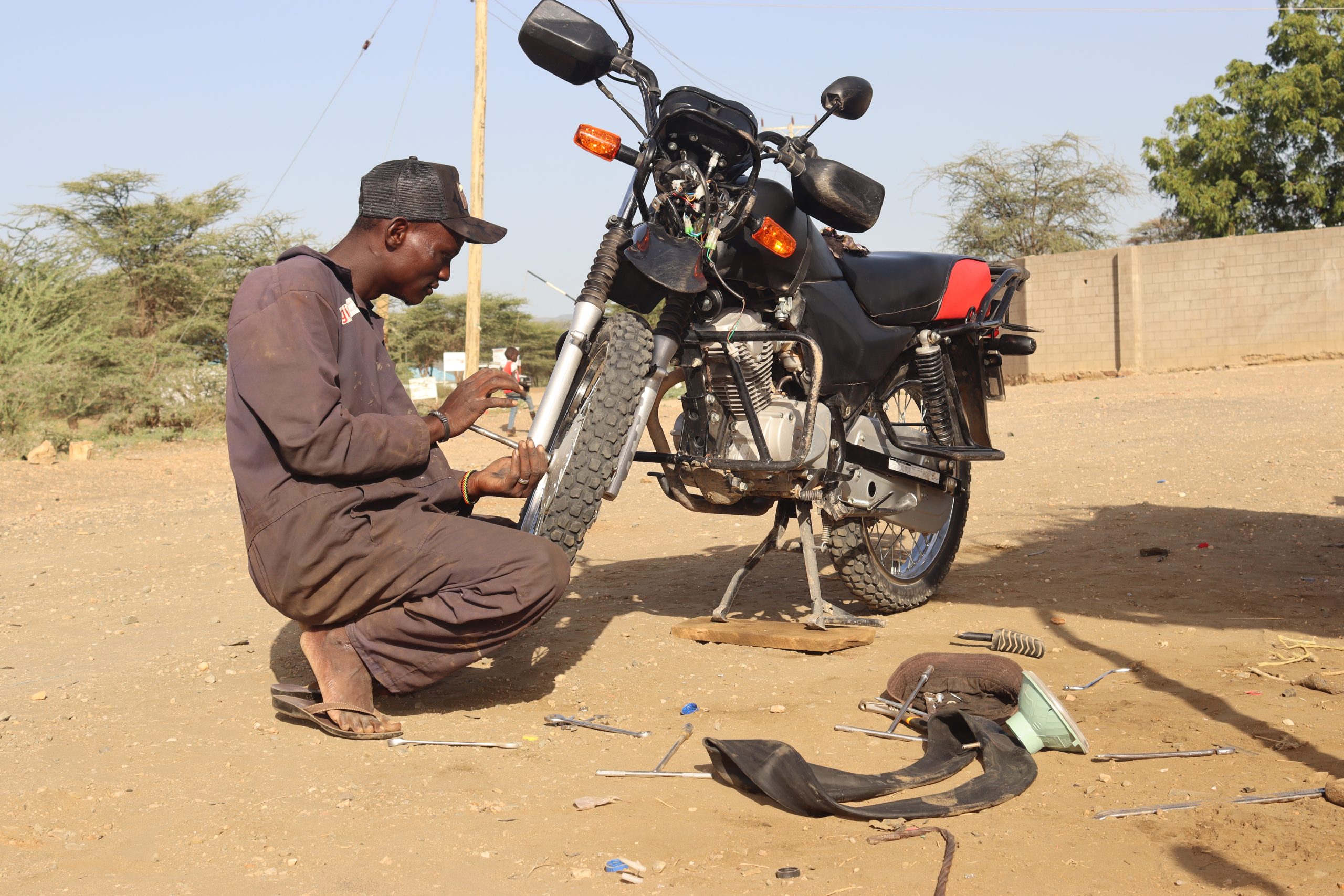
In the dusty border town of Lokiriama in Turkana County, mornings now begin early for 24-year-old Kampeen Ekiru. Before sunrise, motorcycles are already lined up outside his small garage, their owners waiting patiently for the young mechanic many now fondly call “Engineer.” But just a few years ago, Kampeen’s life looked very different. Unemployed and struggling to support himself and his family, each day felt uncertain. Without a stable source of income, he often relied on casual jobs that barely provided enough money for food.
The frustration and hopelessness slowly took an emotional toll on him. “Before I joined the project, life was very difficult. Every day felt unfair and stressful because I could not provide food for myself or my family,” Kampeen recalls. “Sometimes I was idle and tempted to engage in bad activities like alcoholism because there was nothing meaningful to do.” In the community, many young unemployed men were often viewed with suspicion, and Kampeen was no exception. Some people believed he would eventually drift into crime or gangs. Respect was hard to come by.
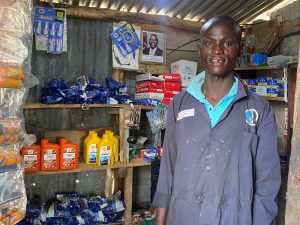
Kampeen inside his fully restocked workshop.
Everything changed when Kampeen heard about an opportunity under the GIZ-supported SCIDA III Project, which was equipping youth in cross-border communities with vocational and livelihood skills. Having long admired friends who had trained as mechanics and transformed their lives, he immediately applied for the motorcycle mechanic training in Napak, Uganda. “I had always dreamt of training in mechanics because it is a marketable skill,” he says. “I knew if I got the chance, I could change my life.”
Kampeen was selected among ten youth beneficiaries from Lokiriama to undertake the intensive three-month training. After successfully completing the course, he returned home with practical skills, renewed confidence, and a startup toolkit provided through the project to help him establish his own business.
Today, his garage has become one of the busiest and most trusted repair shops in the area. On average, Kampeen repairs five motorcycles a day, nearly 30 every week, serving customers from both Kenya and neighboring Uganda.
Kampeen busy working on a client's motorbike at his workshop.
One customer, Ng’akimak from Lokiriama, still remembers the day Kampeen repaired a motorcycle with a complicated piston and valve problem that others had failed to fix. Impressed by his professionalism and skill, the customer began referring more clients to him, helping Kampeen steadily build a loyal customer base across the border region. “With every customer I serve, more people begin to trust my work,” Kampeen says proudly. The impact of the business has extended far beyond the garage walls. For the first time in his life, Kampeen can comfortably afford food, medical care, and other basic needs without depending on relatives or friends.
His family, once worried about his future, now beams with pride at the progress he has made. “My family is very happy seeing me support myself and help them too,” he says. “That motivates me even more.” For Kampeen, success is not simply about money or material possessions. “People think owning a home is just having a house,” he explains thoughtfully. “For me, a home means living a meaningful life without lacking basic needs like food. Today, I can live comfortably and peacefully, unlike before.” The transformation has also changed how the community sees him.
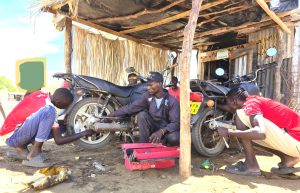
Kampeen (c) with his team at his workshop repairing a motorbike together.
Once dismissed as another idle youth, Kampeen is now respected as a professional and role model. Young people increasingly visit his garage seeking mentorship and encouragement. His growing business has already created opportunities for others. Kampeen has employed two fellow youths who assist with repair work, helping them stay away from idleness, drug abuse, and crime while gaining valuable hands-on experience. His garage has also reduced the burden on local residents who previously travelled long distances to Lodwar for mechanical services. Now, people can access affordable and reliable repairs within the community. Customers from nearby Ugandan border villages also seek his expertise, strengthening cross-border connections and skills exchange between communities.
Beyond changing his own life, Kampeen’s success is helping stimulate the local economy. His earnings circulate within the community through local shops, food vendors, and wages paid to his employees, creating ripple effects that extend far beyond his workshop.
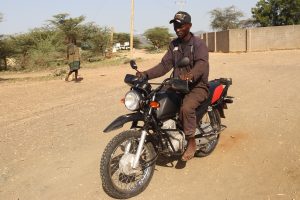
Kampeen doing a road test on one of the motorbikes after repairs.
Today, Kampeen dreams even bigger. He hopes to expand his garage into a fully equipped mechanical workshop and continue mentoring more young people in Lokiriama. His journey stands as a powerful example of how the GIZ-supported SCIDA III Project is transforming lives across border communities by equipping young people with practical skills, economic opportunities, and renewed hope for the future.