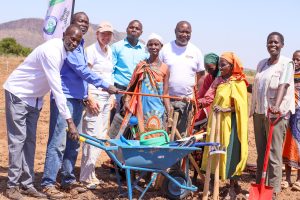
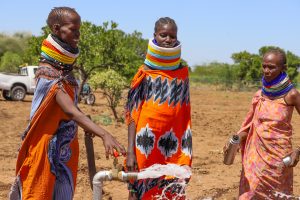
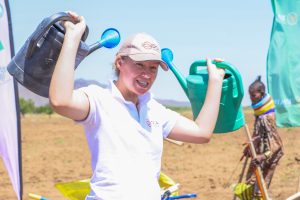
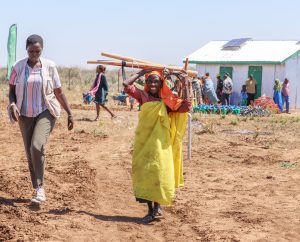
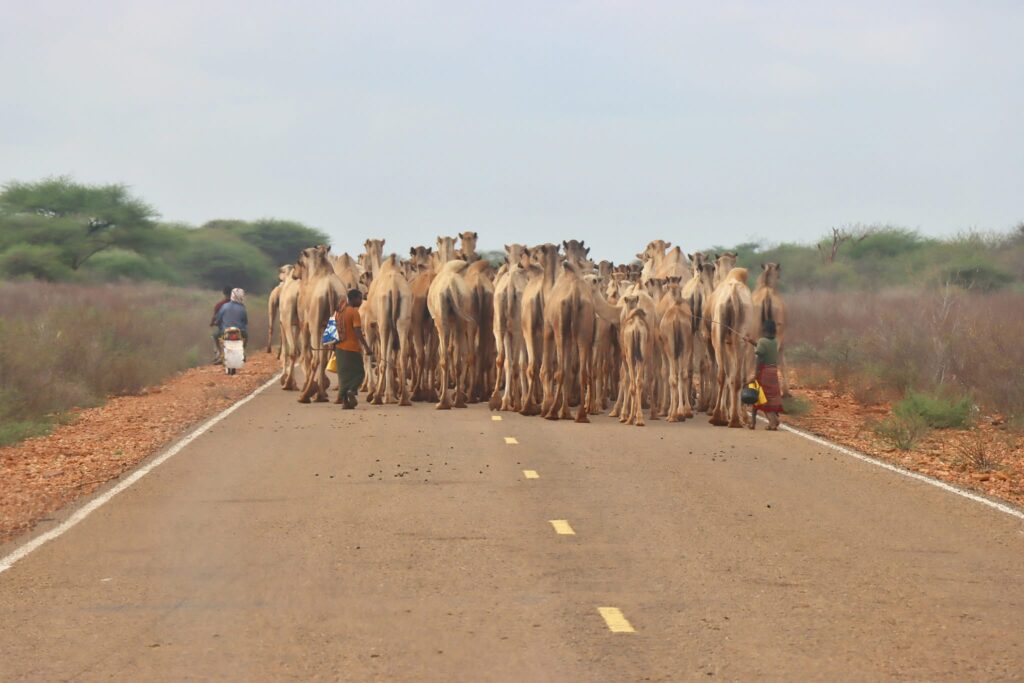
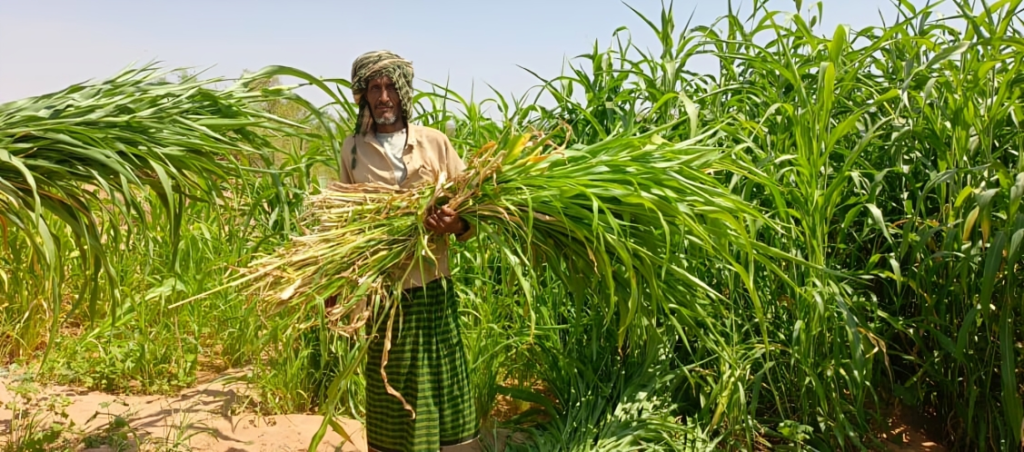
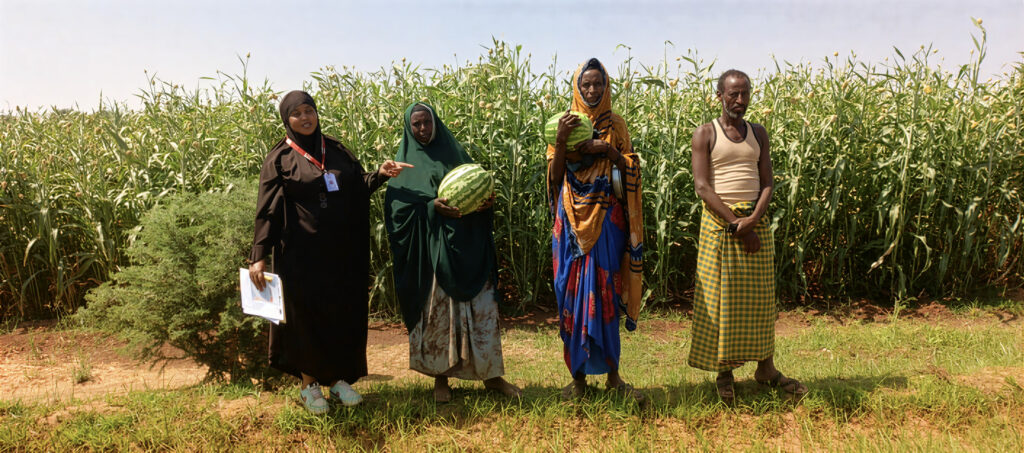
In a region that experiences hot and dry conditions year-round, this support is strengthening community resilience and enabling pastoralist households to sustain their livelihoods even during prolonged droughts. Farmers also received training in agroecology, equipping them with climate-smart skills for long-term impact.
For decades, the Turkana of Kenya and the Nyangatom and Dassanach of Ethiopia have lived at the edge of survival. Borders had become markers of tension, grazing lands contested, and a single raid could ignite cycles of revenge lasting generations.
Climate stress, shrinking pasture, porous borders, and the proliferation of small arms have over the years turned everyday life into a gamble with violence.
But one weekend at the beginning of 2026, in Omorate, something extraordinary happened: the sound of gunfire was replaced with songs and built hope for a chance for peaceful co-existence.
The Transboundary Peace Advocacy Campaign was supported through the European Union funded ‘Strengthening Integrated Peace, Resilience and Disaster Risk Reduction (SPREAD) project, implemented by DanChurchAid in Kenya and Ethiopia, together with partners Tupado and the Ethiopian Catholic Church Social and Development Commission (ESS-SDCO).
The campaign brought together leaders, youth, women, elders, and security actors from both sides of the Kenya-Ethiopia border, not to negotiate from a distance, but to meet face to face, speak truth, and reclaim shared humanity.
There is no progress in conflict — a call from leadership
Opening the engagement, Mr. Bekele Lokoroma, South Omo Regional State Deputy Zonal Head of Security, stated that conflict is a huge contributor to underdevelopment and does not give a chance to improve situations.
“There is no progress in conflict. Stealing and violence only take us backwards. Peace allows us to share water, pasture, and even protect our wildlife together.”
Bekele Lokoroma, South Omo County Head of Security
His words were not abstract. He acknowledged the realities facing the region, especially the displacement of neighbouring communities like the Merille due to lake expansion, and urged compassion over exclusion. “Welcome them. Share with them. Live together. They are people, just like us, facing a situation beyond they ability to amend,” he urged.
In a region where scarcity often fuels hostility, this call reframed peace as shared survival, not weakness.
Omorate: Where old enemies sat as old friends
Holding the engagement in Omorate was symbolic.
This border town has long been associated with raids, fear, and separation. Yet during the campaign, Turkana and Dassanach youths, some previously divided by active conflict, reunited, ate together, shared stories, and spent nights under the same skies
Instead of planning raids, youths discussed how to reach peers still eager for violence and bring them into dialogue spaces. Peace, once confined to boardrooms, had moved where it mattered most: the kraals and grazing fields.
Peace that opens borders, markets, and schools
From the Kenyan side, Mr. Emmanuel Achuka, Ward Administrator, spoke of tangible change: “The peace we have initiated has opened our borders for business. Our children can go to school without fear.”
Yet his message was also a reminder: peace must deliver development. He highlighted urgent needs for schools and water services in remote kraals like Nang’usilng’atuny, reinforcing that peace without services is fragile.
Assistant County Commissioner Steve Juma (Kibish) echoed this, addressing the community in the local language: “Last year, there was no bloodshed. That is not a small thing.”
He reaffirmed the commitment of both governments to sustained dialogue, coordinated security, and cross-border cooperation, adding , “We are one community, only separated by borders.”
“We are one community, only separated by borders.”
Steve Juma, Assistant County Commissioner, Kibish
When a football replaced guns
Perhaps the most powerful moment apart from the speeches was at the football pitch.
A Sport-for-Peace match brought together cross-border traders and administrators in a game that ended in a 2–2 draw. There was no obsession with winning. Players exchanged jerseys, laughed, and embraced. The Dassanach and Turkana youth also took to the pitch in a friendly match that ended in a 2-1 win for the Dassanach youth. This was celebrated by all teams.
One footballer, Joseph Ekal, captured the spirit of the day: “Even when someone played rough against me, I did not respond with anger. Because at the end of the day, whoever wins, we remain brothers.”
For communities where young men are often mobilised into violence, this was a powerful reimagining of masculinity, strength, and rivalry.
“Even when someone played rough against me, I did not respond with anger. Because at the end of the day, whoever wins, we remain brothers.”
Joseph Ekal
For communities where young men are often mobilised into violence, this was a powerful reimagining of masculinity, strength, and rivalry.
The SPREAD approach: peace woven into livelihoods
What makes this intervention under the SPREAD project different is how peace is built.
Through the project, peacebuilding is not treated as a standalone activity, but woven into livelihoods, resilience, and local governance. The project works across the entire peace ecosystem, national and county governments, peace committees, kraal elders, youth and women groups, security actors, CSOs, and faith-based organisations
TUPADO Executive Director, Mr. Sammy Ekal, emphasized that the peace sought after will continue to opened doors for business, for friendship, and for dignity.”
His appeal was clear and urgent, “We pray that both governments fully own this initiative long after donor funding ends.”
This peace will ensure prosperity, let us guard it
Sammy Ekal, Executive Director, TUPADO
His appeal was clear and urgent, “We pray that both governments fully own this initiative long after donor funding ends.”
From songs to strategy: rewriting the story of the border
Traditional dances, peace songs, storytelling, and a vibrant peace caravan through town transformed Omorate into a living statement: peace is not just negotiated, it is also celebrated.
One Nyang’atom artist, Lotiono Nyaamuara, told the crowd:
“This is the biggest event I have ever performed in. Many people know my peace songs, but today I finally met my fans.”
He announced a new peace song dedicated to SPREAD, proof that culture remains one of the strongest vehicles for reconciliation.
A fragile peace, a shared responsibility
The Turkana–Dassanach conflict did not emerge overnight, and it will not disappear overnight either. But the events in Omorate showed what is possible when communities are trusted, youth are engaged, women are included, and peace is linked to everyday survival.
Mandera (Kenya) | Gedo (Somalia) | Liban & Dawa Zones (Ethiopia)
Drought Snapshot
335,000 people in need in Mandera County(IPC Phase 3 – Crisis)
470,286 people affected by drought across Jubaland, Somalia
350,008 people facing extreme water shortages in Dollo Addo, Ethiopia
250,000+ people projected to rely on water trucking in Mandera beyond January 2026
2 million+ livestock at risk across Gedo Region
11,778 people displaced into IDP sites in Dollo Addo
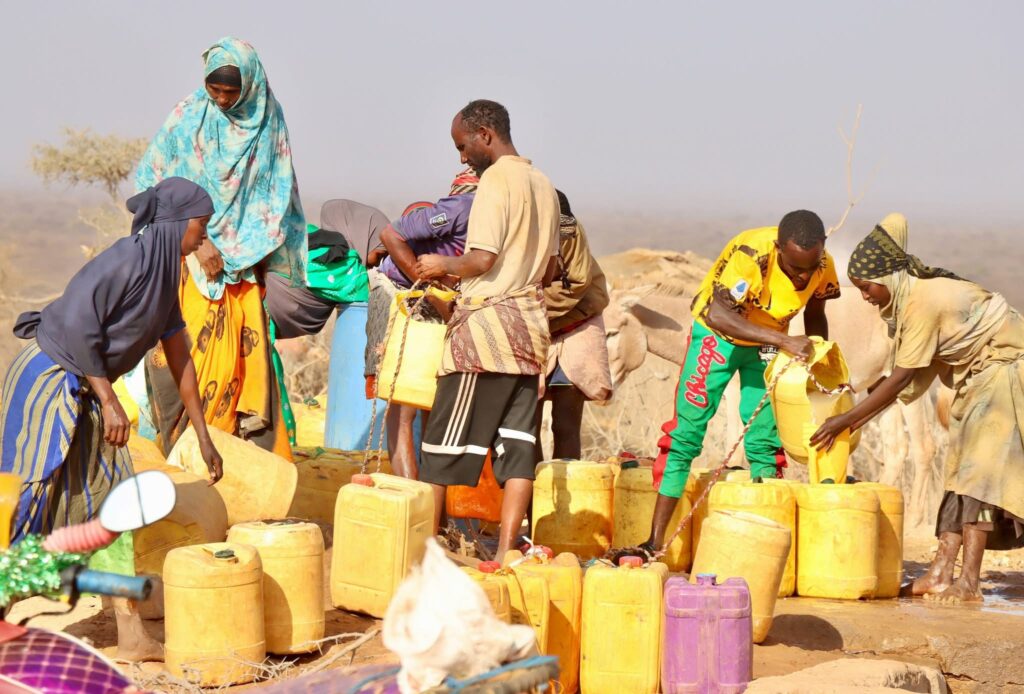
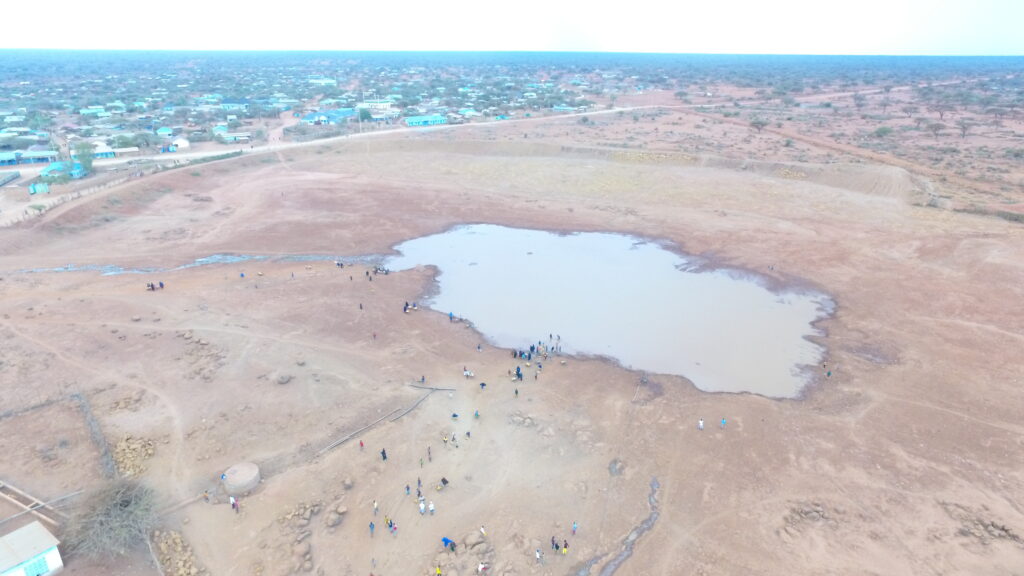
Across the Mandera–Gedo–Dollo Addo borderlands, three failed rainy seasons have dried up traditional water sources, pushing communities into crisis.
A Crisis Stretching Across Borders
By December, drought conditions across the tri-border region of Kenya, Somalia, and Ethiopia had intensified into IPC Phase 3 (Crisis). In Mandera County alone, an estimated 335,000 people are now in urgent need of assistance. Across Somalia’s Jubaland State, 470,286 people have been affected, while in Ethiopia’s Dollo Addo area, more than 350,000 people face extreme water shortages.
What makes this drought particularly severe is its persistence. Three consecutive failed rainy seasons have eroded household coping mechanisms, weakened livestock-based livelihoods, and intensified cross-border movements in search of water and pasture. What were once seasonal stresses have become a sustained emergency.
Across the Mandera–Gedo–Dollo Addo borderlands, drought is no longer a temporary shock. It is reshaping daily life, livelihoods, and survival strategies.
Dry Wells, Long Walks, and Rising Costs
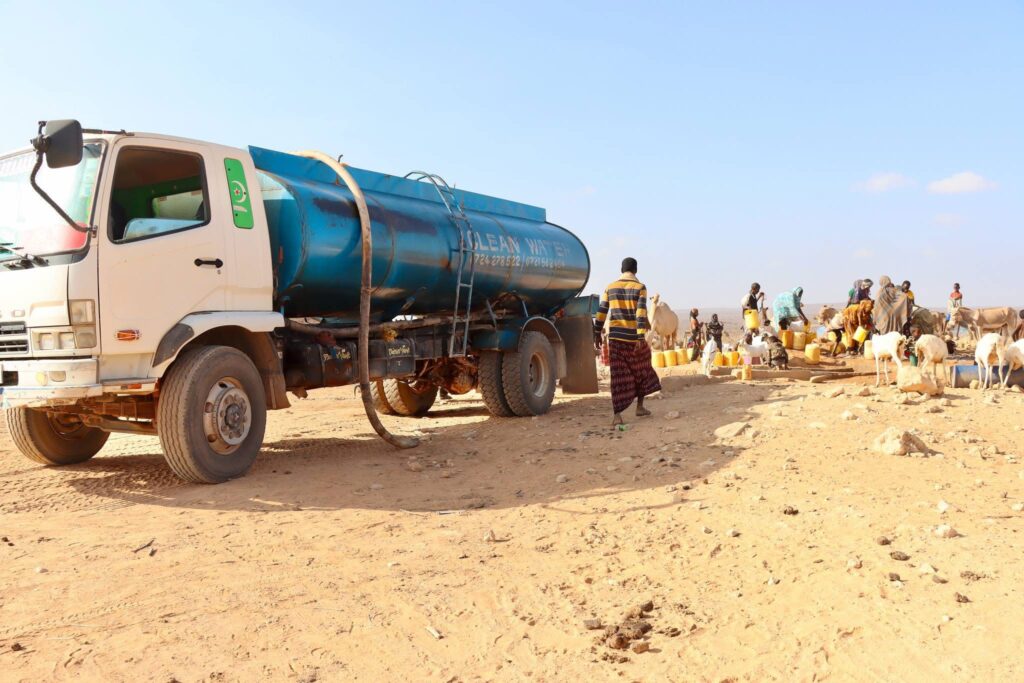
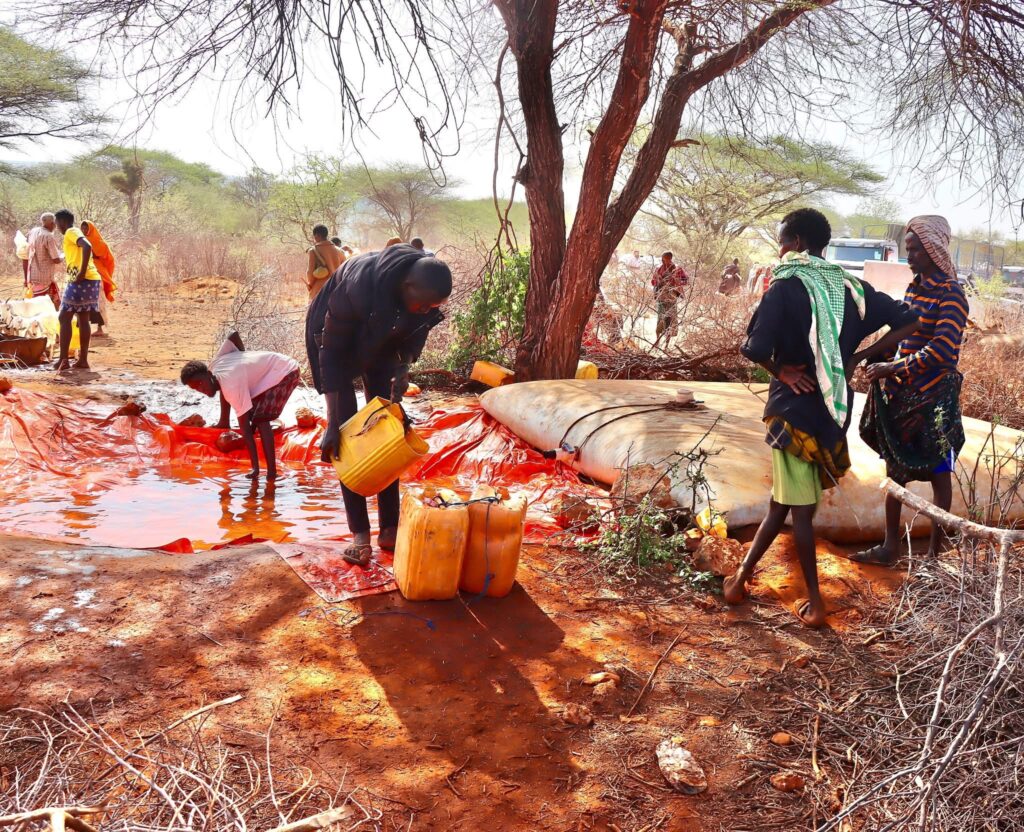
In Mandera County, nearly 80 per cent of surface water sources have dried up. County officials report that 120,000 people currently depend on daily water trucking, a figure projected to exceed 250,000 people by January 2026 if the rains fail again. Although most boreholes remain functional, many are under severe strain and require urgent rehabilitation after months of continuous use.
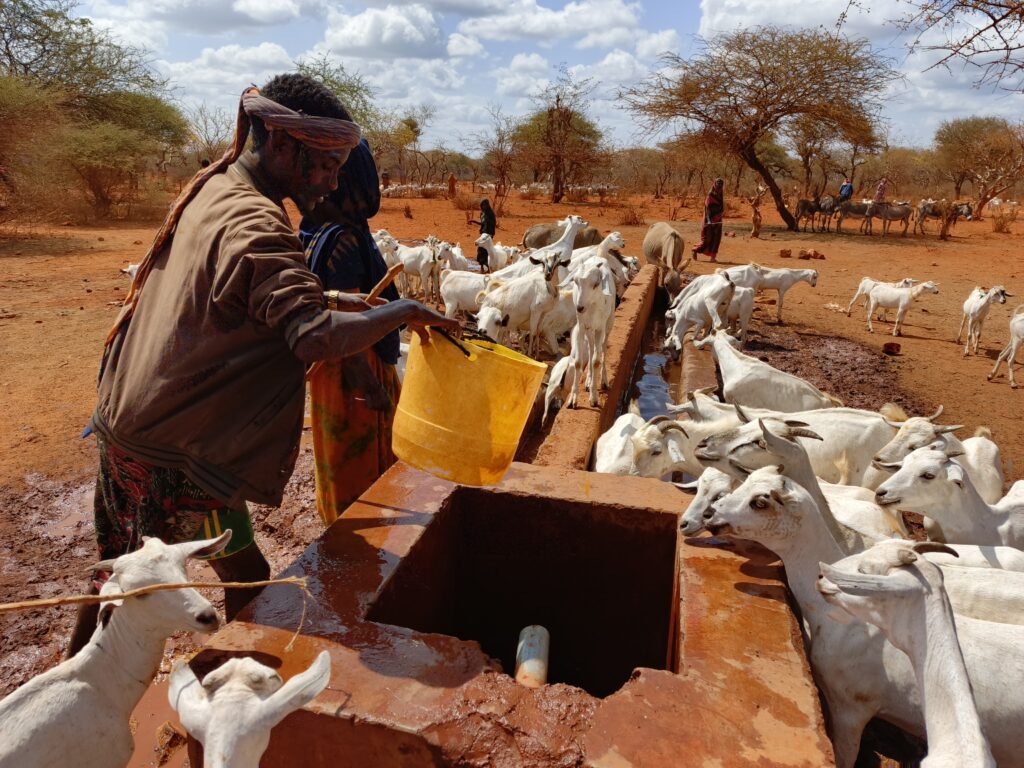
With pans, birkas, and shallow wells dry, water trucking has become the primary lifeline for thousands of families.
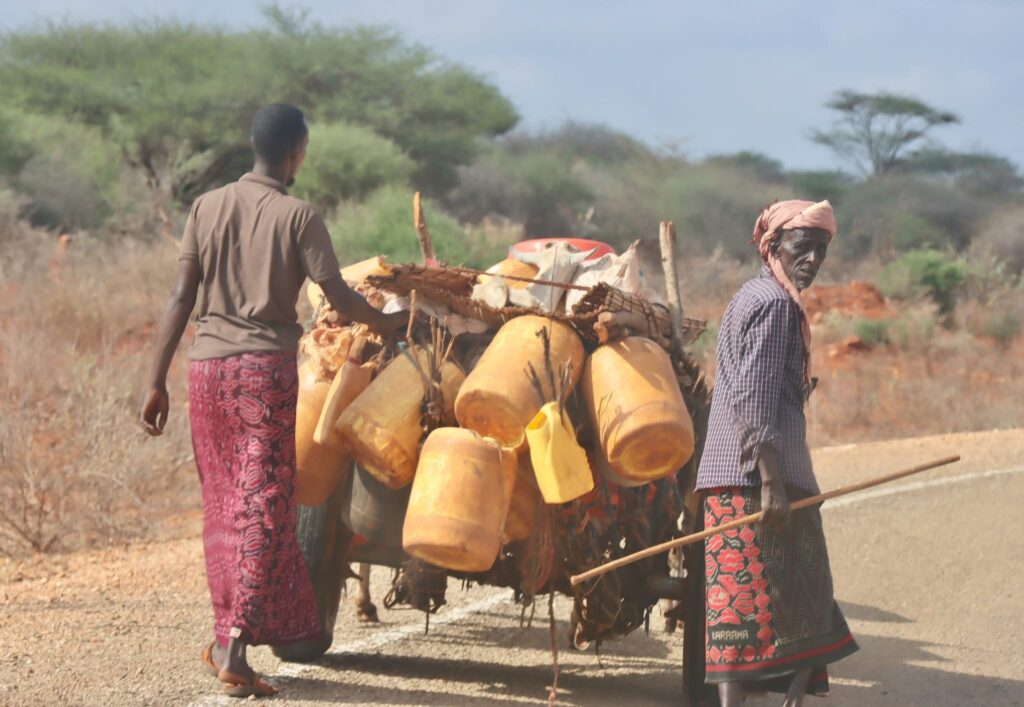
Across the border in Gedo, water has become increasingly unaffordable. Prices for a 10,000-litre truckload range between USD 140 and USD 250, forcing households to make difficult trade-offs between water, food, and healthcare. In Dollo Addo, women and children walk 30 to 75 kilometres each day in search of unsafe water, heightening risks of disease and exposure.
“In some communities, the search for water now defines the entire day.” Adan Mohamed, Resident, Banisa
Livestock Losses, Hunger, and Displacement
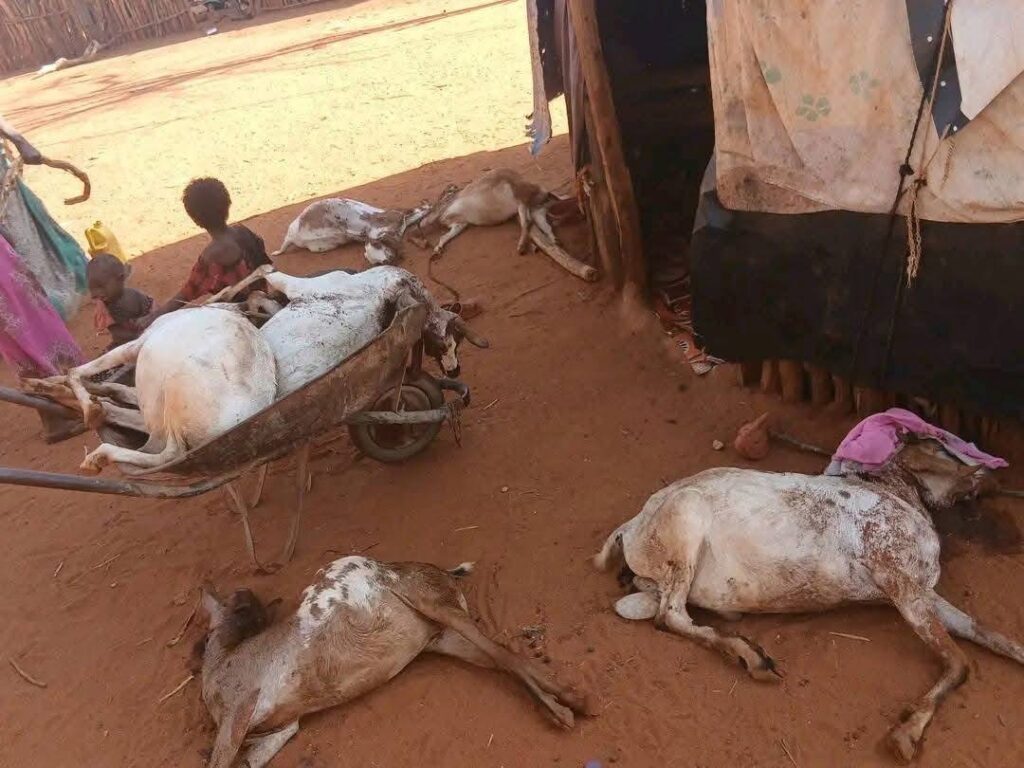
Caption:Livestock losses and displacement are rising as drought pressures intensify across the borderlands.
Livestock, which is the backbone of pastoral livelihoods, is under acute threat. In Gedo Region, over two million animals are at risk as herds travel long distances in search of pasture. In Dollo Addo, assessments report 246 livestock deaths and nearly 274,000 animals at immediate risk, compounded by disease outbreaks such as PPR and lumpy skin disease.
Food insecurity is deepening. Somalia’s national drought declaration indicates that 4.4 million people faced crisis-level food insecurity between October and December 2025. In Dollo Addo, health screenings identified 7 cases of severe acute malnutrition and 56 cases of moderate acute malnutrition among children assessed.
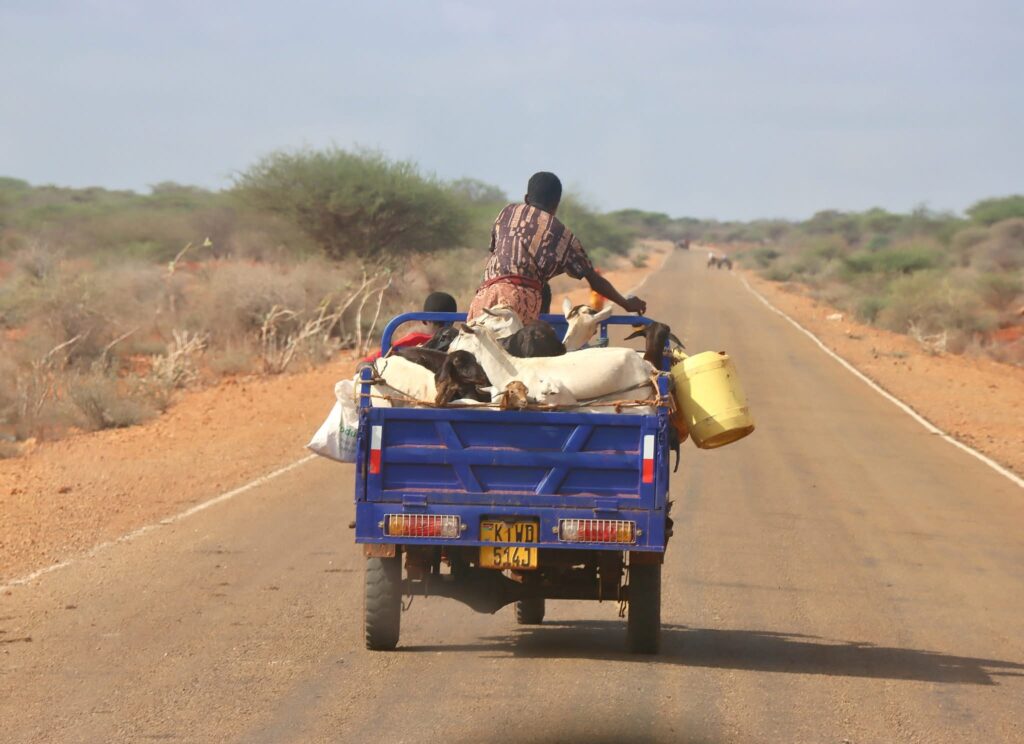
Displacement is becoming a last-resort coping mechanism. In Ethiopia, 1,963 households (11,778 people) have been displaced into IDP sites with limited access to basic services.
From Emergency Relief to Stabilising Systems
As the crisis escalated, BORESHA-NABAD accelerated an integrated drought response that combines immediate mitigation with longer-term resilience. Working alongside local authorities, private operators, and community institutions, the programme has prioritised actions that stabilise essential services while reducing the risk of conflict.
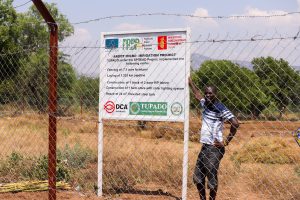
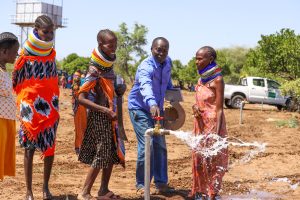
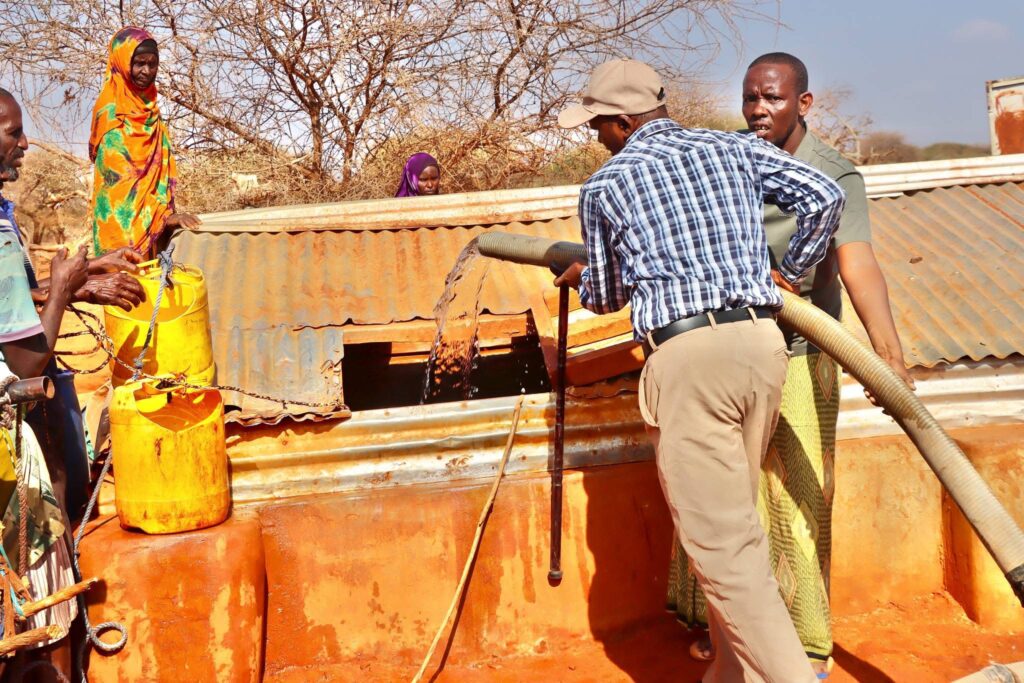
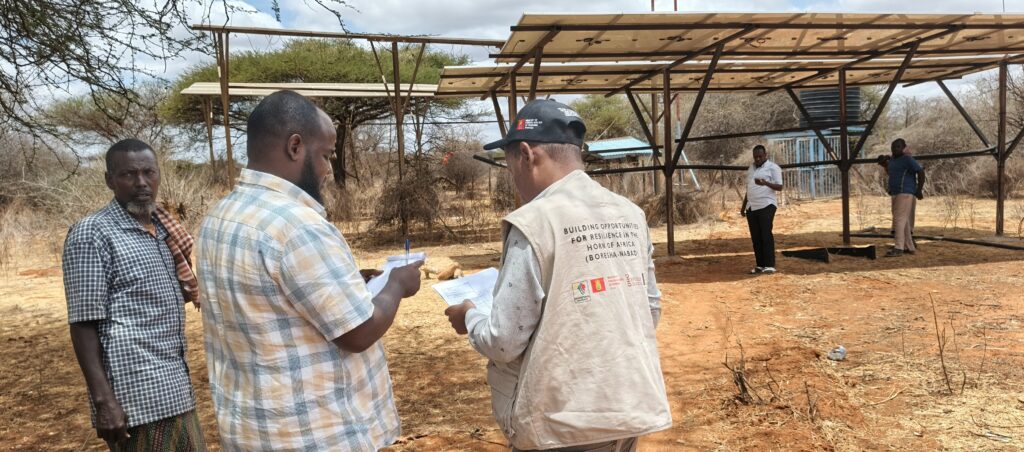
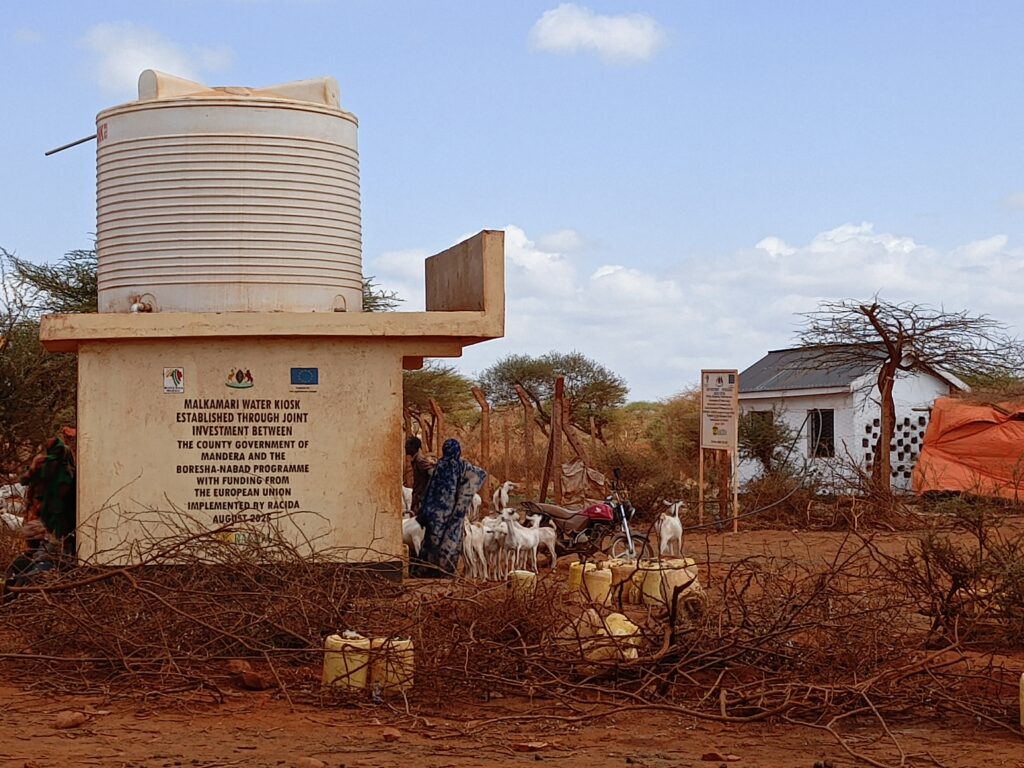
BORESHA-supported water infrastructure investments are restoring access while strengthening community-led management.
Restoring Water Access through Partnerships
Across the three countries, BORESHA-NABAD has supported the rehabilitation and expansion of water systems through public–private partnerships:
18 boreholes rehabilitated and 2 new boreholes drilled in Kenya
14 shallow wells and 1 underground tank rehabilitated
Earth pans and underground tanks restored in Somalia and Ethiopia
Solarisation, filtration, kiosks, and last-mile piping implemented with Water User Committees and private operators
These investments now support 50,000+ households and 100,000+ livestock, easing competition over water and strengthening local governance of shared resources.
Protecting Livelihoods through Fodder Markets
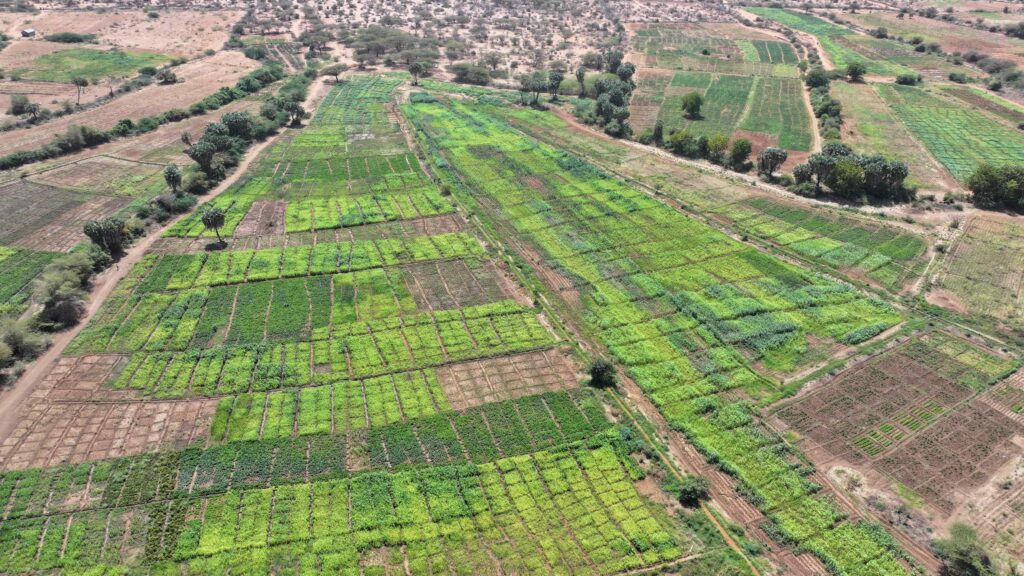
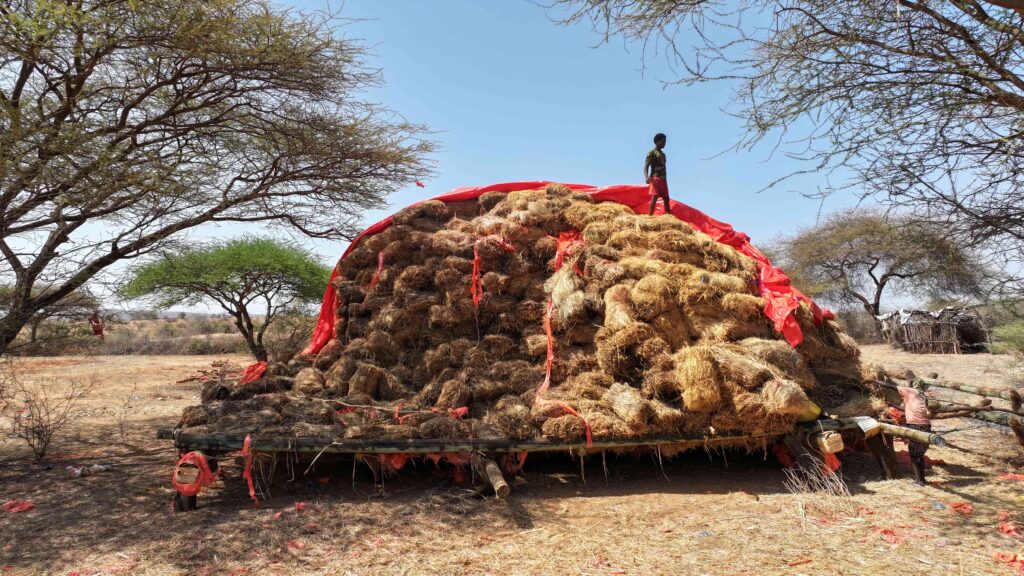
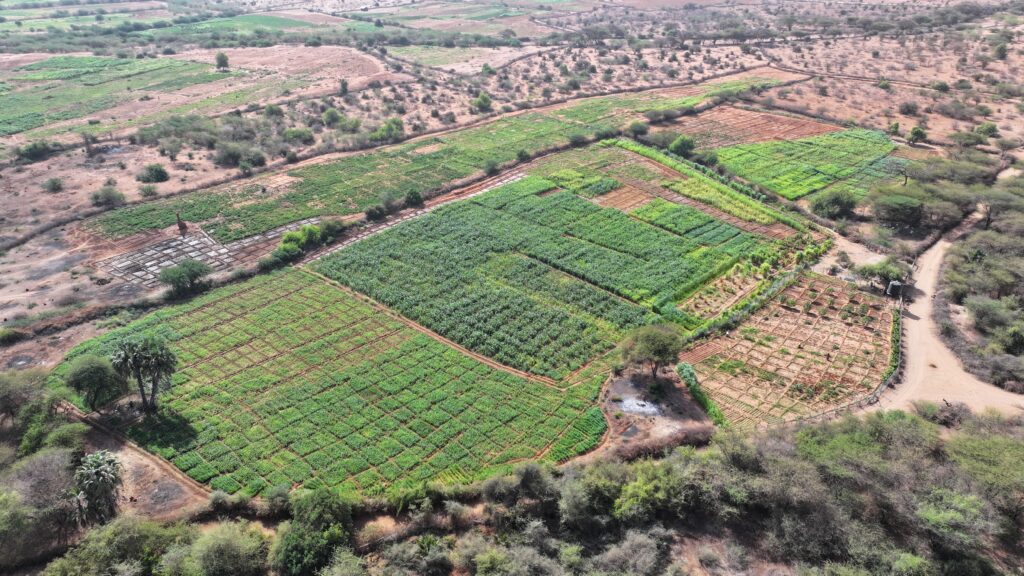
Fodder production is helping pastoralists protect livestock and stabilise incomes during peak drought.
To cushion pastoralists against livestock losses, BORESHA-NABAD has supported the expansion of climate-smart fodder markets:
1,000+ farmers engaged through Pastoral Field Schools
11 agrovet input suppliers linked to farmers across Kenya and Ethiopia
8 solar irrigation systems installed to reduce reliance on costly diesel
11,000+ fodder bales produced, supplying local and cross-border markets
As incomes stabilise, farm groups are reinvesting profits into animal fattening and recovery of drought-affected livestock, while the Mandera County Government has established fodder banks in all sub-counties, embedding preparedness beyond programme support.
Building Climate-Smart Livelihoods
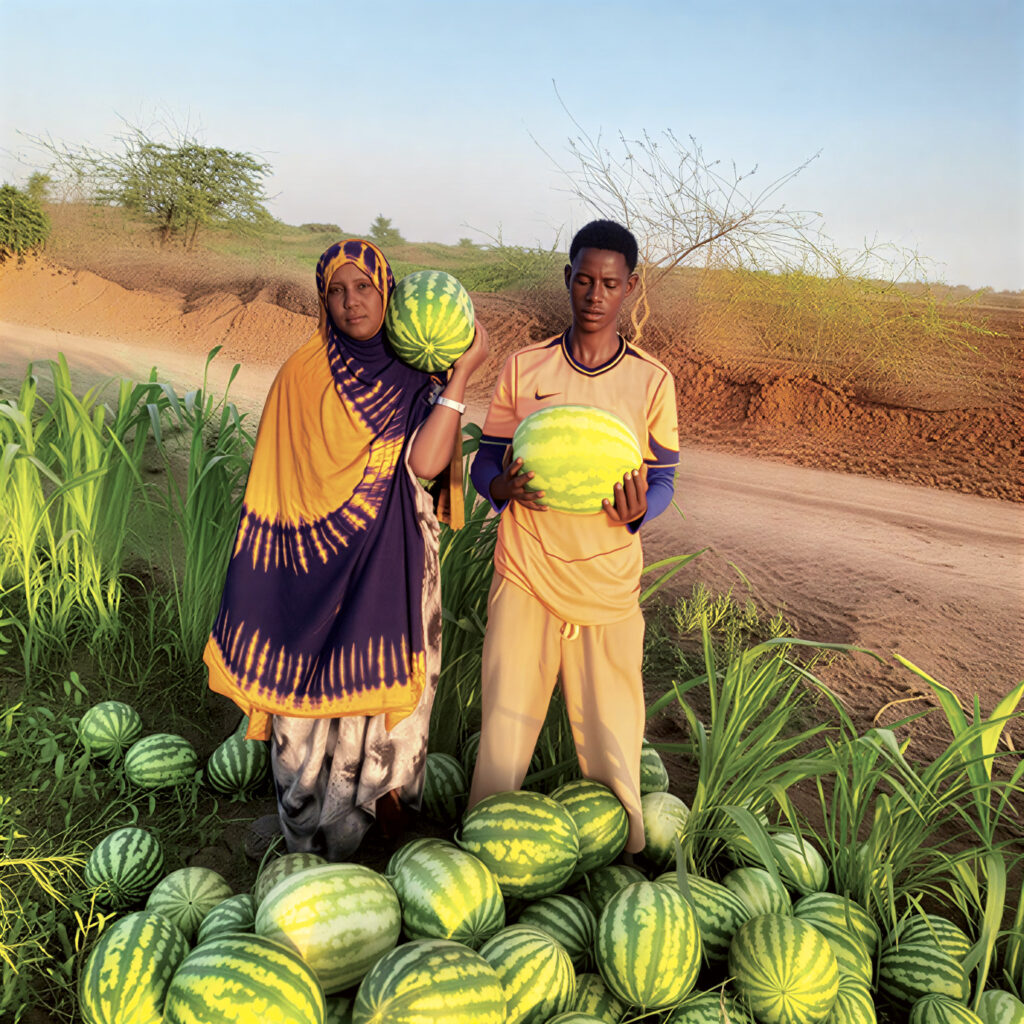
Caption:Climate-smart farming and market linkages are strengthening household resilience.
BORESHA-NABAD’s drought response also strengthens livelihoods through market-based approaches:
920 pastoralists and 500 agropastoralists linked to agrovets, extension services, and traders
45 tonnes of sorghum, 10 tonnes of maize, and 20 tonnes of beans produced for food and feed security
200 LCIG members diversified into higher-value crops
Average income of USD 4,880 per farmer from fodder-linked reinvestment
Riverine farmers increased yields from 3 tonnes to 18.5 tonnes, earning up to USD 8,150 per farmer
These gains reflect stronger coordination across local market systems and improved household resilience to climate shocks.
Looking Ahead
As drought conditions persist, the borderlands require responses that go beyond short-term relief. By strengthening water systems, protecting livelihoods, and reinforcing community-led management, BORESHA-NABAD continues to support families not only to survive the current drought, but to face future climate shocks with greater resilience.
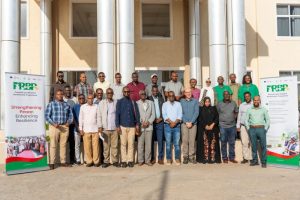
DanChurchAid Kenya, in partnership with GIZ Kenya and IGAD, under the Delegation of The European Union to Kenya funded Peaceful and Resilient Borderlands Programme, spearheaded a transformative four-day capacity-building initiative in Lodwar on Multi-Hazard Early Warning Systems (MHEWS) and Disaster Risk Management (DRM). The activity ran from 24-27 November 2025.
Peaceful Resilience Borderlands Programme (PRBP) is the umbrella programme under which SPREAD implemented across Kenya, South Sudan, and Ethiopia, falls. DCA serves as the lead consortium partner for the SPREAD project.
DCA led in the mapping and mobilization of key stakeholders while IGAD and GIZ facilitated the training.
The initiative brought together government focal points from South Sudan, Kenya, and Ethiopia across the Karamoja cluster, strategically positioning them to strengthen regional resilience.
By equipping cross-border technical working groups with advanced capabilities in risk analysis, emergency monitoring and forecasting, information dissemination, and preparedness planning, this training served as a catalyst to a more coordinated, rapid, and effective disaster response architecture.
Through an immersive and participatory learning experience, the programme not only built technical expertise but also fosters a unified commitment to safeguarding border communities against emerging hazards.
The Building Opportunities for Resilience in the Horn of Africa (BORESHA-NABAD) team in Ethiopia, from consortium partners Danish Refugee Council and the Rural Agency for Community Development and Assistance (RACIDA), participated in a high-level stakeholder review workshop hosted by the DRC Ethiopia Area Office in Dollo Ado. The session brought together government stakeholders from regional, zonal, and woreda levels, as well as key local partners.
The workshop served as a platform for stakeholders to review achievements, share lessons, and gather feedback aimed at informing adaptive programming. The BORESHA-NABAD team shared updates on implementation progress, strategic priorities, and plans aligned with government-led efforts in animal health, climate-smart agriculture, income generation, and peacebuilding.
Stakeholders commended the programme’s inclusive systems approach, which was noted for its community-driven, facilitative design. The approach seeks to strengthen local systems and promote sustainability across the borderlands of Ethiopia, Somalia, and Kenya.
“From the testimonies shared by our Woreda staff, we are pleased to learn that BORESHA is highly consultative and closely aligned with government initiatives. What stands out even more is its strong commitment to locally led solutions and its emphasis on strengthening systems through partnerships, rather than relying on a direct delivery model,” said a representative from the Somali Regional Government.
Funded by the European Union, BORESHA-NABAD is part of the broader EU Peaceful and Resilient Borderlands Initiative, which supports cross-border resilience and peacebuilding efforts in Kenya, Somalia, and Ethiopia. In Ethiopia, the programme is implemented by the Danish Refugee Council in partnership with RACIDA.
The Peaceful and Resilient Borderlands Programme (PRBP) has successfully conducted the first cross-border coordination forums in Moyale and Mandera clusters, which targeted the establishment and hosting of cross border steering committees.
The Peaceful and Resilient Borderlands Programme (PRBP) is a Multi-Donor Action: Support for Enhanced Effective Coordination of Peaceful and Resilient Borderlands for below IGAD border clusters.
♻️ Karamoja Cluster
♻️ Mandera/Somali Triangle Cluster and
♻️ Moyale/Moyale Cluster
The program focuses on the Horn of Africa region, particularly within the IGAD clusters covering Ethiopia, South Sudan, Somalia, and Kenya. Notably, these countries share common socio-economic and cultural ties but also face challenges such as conflict, migration, climate change, and underdevelopment.
The overarching program’s objective is to reduce the impact of local conflicts in the borderlands and enhance resilience in three IGAD clusters of the Horn of Africa.
The program will specifically reinforce coordination on cross-border management, including local authorities and IGAD as well as intensify sharing of information to mitigate conflict and promote socio-economic development.
The Peaceful and Resilient Borderlands program will answer to below thematic outputs:
✅ Cross-border coordination by identifying and supporting IGAD structures.
✅ Raising awareness on cross-border policies with national governments, local authorities, private sector and civil society in the 3 IGAD Clusters.
✅ Strengthening the management of transboundary resources.
✅ Coordination of components and clusters by establishing and hosting steering committees and other coordination mechanisms such as developing and conducting monitoring and evaluation.
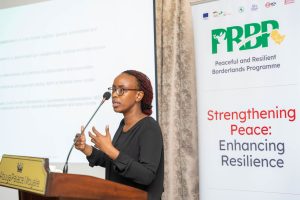
The Intergovernmental Authority on Development (IGAD) has officially launched the Peaceful and Resilient Borderlands Programme in a significant move aimed at promoting peace, resilience, and sustainable development in the Horn of Africa.The initiative, co-funded by the European Union and Germany, was unveiled during an event in Nairobi, with high-level government officials, ambassadors, and representatives of development partners in attendance.
The programme seeks to address conflict prevention and enhance socio-economic development in cross-border regions that have historically suffered from resource-based conflicts exacerbated by climate change. It focuses on three key IGAD clusters: Karamoja, Mandera, and Moyale.
Speaking at the event, Kenya's Cabinet Secretary for the Ministry of East African Community, Arid and Semi-Arid Lands (ASALs), and Regional Development Beatrice Askul Moe highlighted the importance of this initiative.
"The launch of this programme signifies the start of an important strategic initiative aimed at promoting peace, resilience, and sustainable development in this region," she remarked.
Moe noted that the Horn of Africa has been hit hard by adverse climate events like droughts and floods, which have triggered resource-based conflicts and displacements, further compounding the humanitarian crises in these regions.
The programme, which aligns with the IGAD Drought Disaster Resilience and Sustainability Initiative (IDDRSI), aims to foster peaceful coexistence among cross-border communities by strengthening governance structures and building mechanisms to withstand shocks like droughts and conflicts.
"Peace and resilience are inseparable pillars upon which sustainable development can flourish," said Moe. She also acknowledged the role of pastoral communities in Kenya’s border regions, stressing that these areas, though often fragile, are home to communities that share common cultural, linguistic, and economic ties across borders.
Mohamed Ware, IGAD’s Deputy Executive Secretary, echoed these sentiments in his address, calling for a paradigm shift in the perception of the arid and semi-arid lands (ASALs).
"It is time to change the narrative that views the ASALs and their cross-border communities as peripheral. Instead, we must recognize and leverage these communities as bridges for transformative change and development," said Ware. He noted that ASALs cover 70% of the region’s land mass and are home to more than 100 million people, along with 532 million livestock, which contributes up to 50% of the agricultural GDP.
Ware also highlighted the socio-economic potential of ASALs, urging leaders to see these regions not as marginalized areas but as vital economic zones. "Economic integration and trade facilitation are crucial for the development of cross-border communities. By improving infrastructure, streamlining border management procedures, and promoting cross-border trade, these regions can unlock their economic potential," he added.
The Peaceful and Resilient Borderlands Programme aligns with the African Union’s Niamey Convention on borderland management, emphasizing the need for peaceful and cooperative governance of border areas. It also builds on IGAD’s framework for cross-border cooperation, with a strong focus on economic integration, social cohesion, and sustainable resource management.
Both Moe and Ware underscored the importance of regional collaboration and funding. Moe thanked the European Union and Germany for their financial contributions, calling their support "instrumental" in promoting peace and resilience in the region.
She also pointed out that Kenya is actively working with neighboring countries to foster peace and development, with agreements already in place with Uganda, Ethiopia, and plans to initiate similar agreements with Somalia and South Sudan.
In closing, Ware reaffirmed IGAD's commitment to seeing the programme through to its full implementation. "Let us promote the cross-border communities as bridges that connect us, fostering economic growth, social cohesion, and environmental sustainability. Through the collective efforts of our governments, development partners, and local communities, we can create a resilient and prosperous IGAD region," he said.
Avenue Georges Clemenceau Djibouti, Republic of Djibouti P.O. Box: 2653 Email: prbpcoordiantion@igad.int TEL: +251 21 33 02 12
Join Our Community
Stay ahead of the curve with the latest news across the horn of Africa!
Co-financed by the European Union and the German Federal Ministry for Economic Cooperation and Development (BMZ), and implemented by GIZ (Deutsche Gesellschaft für Internationale Zusammenarbeit) in partnership with IGAD.

The Peaceful and Resilient Borderlands Program (PRBP) is jointly co-financed by the European Union (EU) and the Federal Ministry for Economic Cooperation and Development (BMZ) and implemented by Deutsche Gesellschaft für Internationale Zusammenarbeit (GIZ) GmbH as part of the Strengthening the Capacities of IGAD to Increase Resilience in the Horn of Africa Project (GIZ SCIDA III) in close collaboration with The Intergovernmental Authority on Development (IGAD).
The Peaceful and Resilient Borderlands Programme (PRBP) has successfully conducted the first cross-border coordination forums in Moyale and Mandera clusters, which targeted the establishment and hosting of cross border steering committees.
The Peaceful and Resilient Borderlands Programme (PRBP) is a Multi-Donor Action: Support for Enhanced Effective Coordination of Peaceful and Resilient Borderlands for below IGAD border clusters.
♻️ Karamoja Cluster
♻️ Mandera/Somali Triangle Cluster and
♻️ Moyale/Moyale Cluster
The program focuses on the Horn of Africa region, particularly within the IGAD clusters covering Ethiopia, South Sudan, Somalia, and Kenya. Notably, these countries share common socio-economic and cultural ties but also face challenges such as conflict, migration, climate change, and underdevelopment.
The overarching program’s objective is to reduce the impact of local conflicts in the borderlands and enhance resilience in three IGAD clusters of the Horn of Africa.
The program will specifically reinforce coordination on cross-border management, including local authorities and IGAD as well as intensify sharing of information to mitigate conflict and promote socio-economic development.
The Peaceful and Resilient Borderlands program will answer to below thematic outputs:
✅ Cross-border coordination by identifying and supporting IGAD structures.
✅ Raising awareness on cross-border policies with national governments, local authorities, private sector and civil society in the 3 IGAD Clusters.
✅ Strengthening the management of transboundary resources.
✅ Coordination of components and clusters by establishing and hosting steering committees and other coordination mechanisms such as developing and conducting monitoring and evaluation.